Expert Prepress Services Provider: A Boston Print Guide

An expert prepress services provider is the print partner that turns your design file into a press-ready file that reproduces correctly on the first run. Prepress is the quiet stage between a designer’s screen and a printing press, and it is where most print problems are either caught or created. Get it right and your retail displays, banners, and signage match your brand across every panel and every reprint. Get it wrong and you pay for it twice.
For a Boston brand ordering point-of-purchase displays or a large-format signage rollout, the prepress team is the difference between a clean launch and a scramble. This guide explains what prepress actually covers, the real reasons it protects your budget, and how to choose a provider that catches problems before they reach the press.
Key Takeaways
- Prepress is a defined production trade. The U.S. Bureau of Labor Statistics counts roughly 26,200 prepress technicians and workers nationwide, the specialists who prepare files for print.
- Color is the most common print disappointment. More than 50,000 printers worldwide run G7 color workflows to hit client targets consistently, per an ISO estimate cited by Idealliance.
- Large format is unforgiving and growing. The global large format printer market is projected to reach 10.36 billion dollars by 2030 at a 5.5 percent annual rate.
- An expert prepress services provider prevents reprints through preflight, contract proofing, and color management, not luck.
- Local matters: a Boston-area shop lets you run a press check in person before a full production run commits your budget.
What does an expert prepress services provider actually do?
An expert prepress services provider prepares, checks, and color-corrects your artwork so it prints right the first time. Prepress is not an afterthought, it is a recognized production trade. The U.S. Bureau of Labor Statistics counts about 26,200 prepress technicians and workers across the country, the specialists who sit between a designer’s file and the running press.
The work covers a specific set of tasks, and each one is a place a job can fail:
A shrinking specialism
The prepress workforce behind every press run
How few people do this work, and how fast the demand for it is growing.
US Bureau of Labor Statistics prepress occupational data (about 2,800 openings a year); ISO estimate cited by Idealliance; large-format printer market forecast, 5.5% annual growth.
- Preflight. A prepress technician inspects the file for low-resolution images, missing fonts, wrong color spaces, incorrect bleed, and overprint errors before anything reaches a plate or a print head.
- Color management. The team converts artwork to the correct color space and profiles it for the specific press and substrate, so blue stays blue from screen to sheet.
- Imposition and layout. Prepress arranges pages and panels for the press and the finishing method, whether that is a folded piece or a tiled wall mural.
- Proofing. The provider produces a color-accurate proof and gets it approved before the run, so you see exactly what will print.
- File correction. When a supplied file is not print-ready, the prepress team fixes it instead of printing the mistake.
At Albert Basse Associates, this is a dedicated function. Our prepress and design team takes uploaded client files, checks them, and produces color-accurate proofs on an Epson Stylus Pro 9900 contract proofing device before the job moves to production. That single step, an approved contract proof, removes most of the guesswork from a print run.
Why prepress is where print projects are won or lost
Color is the single most common reason a printed piece disappoints, and the industry built a standard to solve it. ISO estimates that more than 50,000 printers worldwide implement and maintain G7 based workflows, the gray-balance method that Idealliance created and that underpins the GRACoL and SWOP specifications. G7 exists because “print it and hope” does not scale across substrates, presses, and reprints.
Here is the practical version. Your brand red has a target value. A screen glows, so it lies. A press lays ink on a physical substrate, so it tells the truth. Prepress reconciles the two by working to a measured color standard, such as the ISO 12647 family, and by proving the result on a contract proof before the run. Skip that, and you find out about a color shift after 500 sheets are printed, not before.
Preflight is the other half of the save. Industry preflight practice, formalized by bodies like the Ghent Workgroup, tests supplied PDFs for the exact faults that cause reprints: images below print resolution, spot colors that should have been process, transparency that flattens wrong, and bleed that leaves a white edge after trimming. A file that looks perfect on a laptop can carry every one of these problems.
An expert prepress services provider closes both gaps before the press runs. Our proprietary order management system lets clients review and approve proofs online and track a project through production, so approval is documented and nothing prints on an assumption. Prepress is not overhead. It is the insurance policy on everything downstream.
Prepress for large-format and retail display graphics
Large format punishes weak prepress more than any other print category, and it is a growing market. The global large format printer market is projected to grow from 7.94 billion dollars in 2025 to 10.36 billion dollars by 2030, a compound annual growth rate of 5.5 percent, as brands invest in retail displays, environmental graphics, and event signage. Bigger prints mean bigger, more expensive mistakes.
Large-format and display prepress carries requirements that small-format work does not:
- Resolution at viewing distance. A trade show banner viewed from ten feet needs different effective resolution than a business card. Prepress sets the right file resolution for the real viewing distance, so art looks sharp without bloating the file.
- Bleed, panels, and tiling. A wall mural or a backlit graphic is printed in panels and assembled. Prepress plans the seams, overlaps, and registration so the finished piece reads as one image.
- Substrate color profiles. The same file prints differently on coroplast, fabric, vinyl, and rigid board. Prepress applies the correct ICC profile for each substrate.
- Finishing allowances. Grommets, pole pockets, hems, and die-cuts all need room built into the file at the prepress stage, not improvised on the finishing floor.
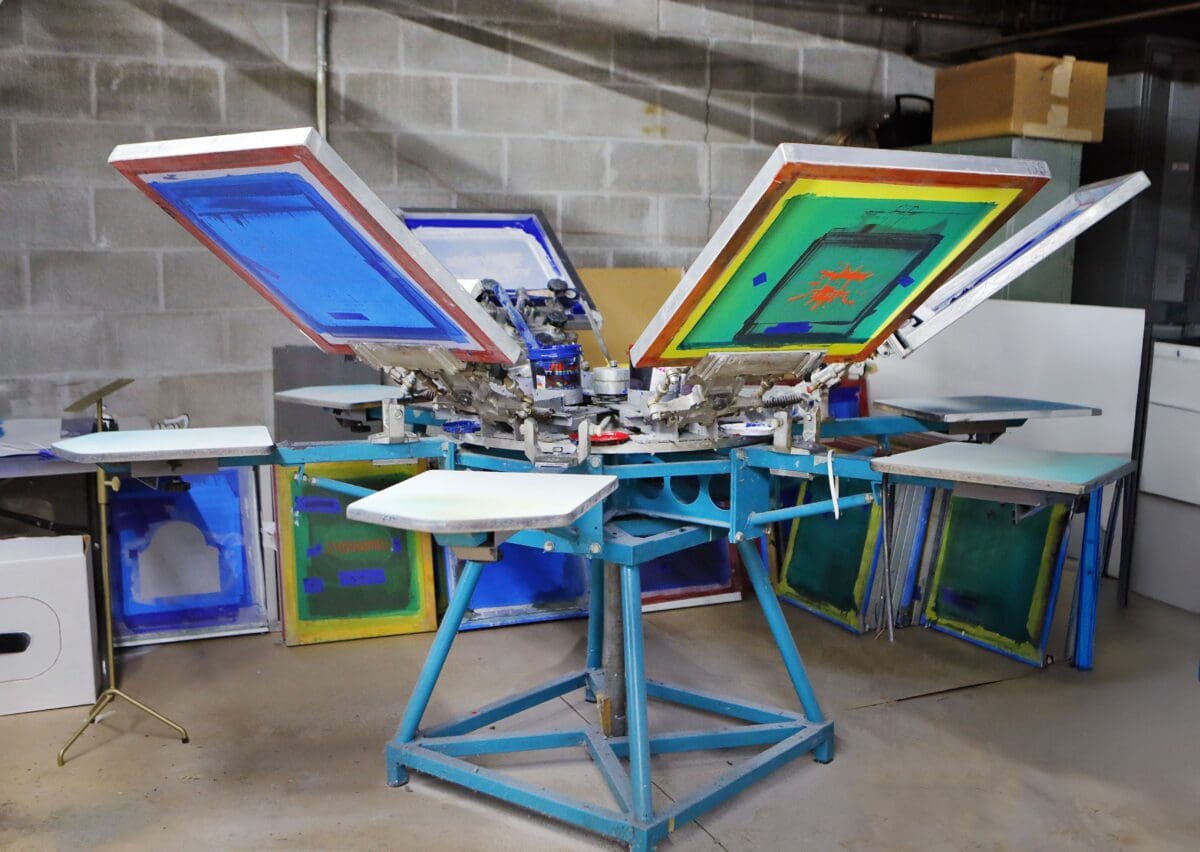
We produce this work across a wide-format fleet, including a Durst P5 350 hybrid printer and a SwissQprint Nyala flatbed, plus screen printing for long runs and durable outdoor graphics. That range only pays off when the file is built correctly for the chosen process, which is exactly what prepress guarantees. If you are speccing a retail program, our guides to retail display graphics in Boston and POP displays show how these decisions play out in the field.
How prepress protects your in-store marketing spend
In-store is still where shoppers decide, which is exactly why display quality has to hold up. A widely cited POPAI shopper study (2012) found that 76 percent of purchase decisions are made in the store, and that nearly one in six brand purchases happen when a display for that brand is present. Your display is doing sales work at the shelf. If its color is off or its print is soft, that work is compromised.
Consistency across a rollout is the harder problem, and it is a prepress problem. When a campaign ships to 40 stores, every display has to match the first proof and match each other, often across different substrates and print methods. That is only possible when color is managed to a standard and locked with an approved proof up front. Digital print makes this scale: Smithers values the global digital print market at 167.5 billion dollars in 2025, rising to 251.1 billion dollars by 2035, with print volume up 54.3 percent, which is what lets brands run short, versioned, store-specific graphics without losing color control.
The payoff shows up at the end of the line. Our finishing and fulfillment team assembles, packs, and ships display programs, and that whole chain depends on a clean prepress start. A managed file becomes a managed rollout.
How to choose an expert prepress services provider near Boston
With the prepress workforce projected to decline about 15 percent between 2024 and 2034 (U.S. Department of Labor data), with only about 2,800 openings a year, fewer companies keep this expertise in house. That makes your print partner’s prepress capability the thing to vet, not an assumption to make. Choose a provider that proofs on a contract-grade device, works to a published color standard, and runs preflight before anything reaches the press.
Use this checklist when you compare shops:
| What to check | Why it matters | The strong answer |
|---|---|---|
| Contract proofing | Approves color before the run | A calibrated proofing device and a signed proof step |
| Color standard | Consistency across substrates and reprints | G7 or ISO 12647 based workflow |
| Preflight process | Catches file faults early | A defined preflight check on every file |
| In-house print methods | Right process for the job | Digital, screen, and large format under one roof |
| Finishing and fulfillment | One accountable partner | Assembly, packing, and shipping in house |
| Local access | Press checks and fast turns | A nearby plant you can visit |
Albert Basse Associates has run prepress for New England brands since 1928, and we are a family owned and operated company now in our fourth generation. Our 35,000 square foot plant in Stoughton sits just south of Boston, about halfway between Boston and Providence, so a press check is a short drive rather than a leap of faith. You can see the workflow and equipment on our facility page, or send your files to our prepress team through our contact page.
Frequently Asked Questions
What is prepress in printing?
Prepress is the stage where a design file is prepared for the printing press. It includes preflight file inspection, color management, imposition, and proofing. The goal is a press-ready file that prints correctly the first time, without surprises in color, resolution, or trim.
What does an expert prepress services provider do that a designer does not?
A designer creates the artwork. A prepress services provider makes that artwork printable on a specific press and substrate. That means correcting color spaces, checking resolution and bleed, applying the right substrate profile, and producing a contract proof. The two roles overlap but are not the same job.
How does prepress prevent reprints?
Reprints usually trace back to two failures: a color mismatch or a file error missed before the run. Prepress catches both. Preflight flags low-resolution images, wrong color spaces, and bleed problems, and a contract proof confirms color before the press starts. Fixing a file costs minutes. Reprinting a completed run costs days and dollars.
Do you offer prepress services near Boston?
Yes. Albert Basse Associates is located at 175 Campanelli Parkway in Stoughton, Massachusetts, just south of Boston. Our prepress and design team supports clients across New England and nationwide, and local clients are welcome to schedule an in-person press check.
Can I upload my own print files?
Yes. You can send print-ready files to our prepress department, and our team will review them and follow up to confirm specifications before production. Supplying a high-resolution PDF in the correct color space with proper bleed gives the fastest, cleanest result.
Ready to get a project moving? Talk to our prepress and design team about your next retail display, banner, or signage program, and we will help you get it to press right the first time.