How Much Does Custom Retail Signage Printing Cost for a Brick-and-Mortar Store?

Custom retail signage attracts customers and raises brand visibility. Printing costs depend mainly on material, size, design complexity, and installation. This article outlines those cost drivers to help you plan and budget.
We summarise typical price ranges, indoor vs. outdoor differences, key pricing factors, and the most cost-effective signage options so you can choose what works for your store.
The cost factors for custom retail signage printing for a brick-and-mortar store include:
Costs vary with materials, size, design detail, and installation. Clear specs lead to more accurate quotes. For specialised retail display guidance, vendors like Albert Basse Associates Inc can help.
- Materials: Material selection (vinyl, acrylic, etc.) has a major price impact.
- Size: Larger pieces use more material and can require more labour or special installation.
- Design Complexity: Detailed or specialty printing increases production time and cost.
Average Pricing Ranges
Typical ranges by product type (examples):
| Product Type | Material | Price Range |
|---|---|---|
| Banners | Vinyl | $50 – $300 |
| Window Graphics | Vinyl | $100 – $600 |
| Directional Signs | Acrylic | $200 – $1,200 |
These are ballpark figures; final pricing depends on specifications, material quality, and production methods.
Budget Considerations
Budget with lifecycle and intended use in mind. Provide suppliers with exact sizes, materials, and artwork to get accurate quotes, and compare providers for long-term value.
- Lifecycle Value: Longer-lasting materials may cost more up front but reduce replacements.
- Detailed Specifications: Clear specs cut back-and-forth and unexpected charges.
- Comparing Providers: Evaluate price, quality, turnaround, and support.
Request detailed quotes from specialists like Albert Basse Associates Inc for accurate estimates.
Differences Between Indoor and Outdoor Signage
Outdoor signs need weatherproof materials and stronger mounting, which raises cost. Indoor signs can use lighter, less expensive substrates with simpler installation.
- Durability: Outdoor materials are built to withstand weather and UV.
- Material Options: Indoor choices are broader and often less costly.
- Design Requirements: Installation complexity differs by location and exposure.
Full-service providers, such as Albert Basse Associates Inc, can recommend products suitable for each environment.
What Factors Influence Custom Retail Signage Pricing?
Main drivers are material, artwork complexity, and installation. Prioritise elements that deliver the most impact for your budget.
- Material Choices: Vinyl, acrylic, composites and specialty substrates vary widely in cost and finish.
- Complexity of Design: More colours, fine detail, or special effects raise production time and cost.
- Installation Requirements: Permits, lifts, or electricians add to final expense.
How Do Materials Like Vinyl, Acrylic, and Digital Print Affect Costs?
Material affects both look and price: vinyl is economical, acrylic appears high-end, and digital printing costs rise with complexity and quantity.
- Vinyl: Cost-effective and durable for banners and window films.
- Acrylic: Premium finish at a higher price, ideal for plaques and indoor displays.
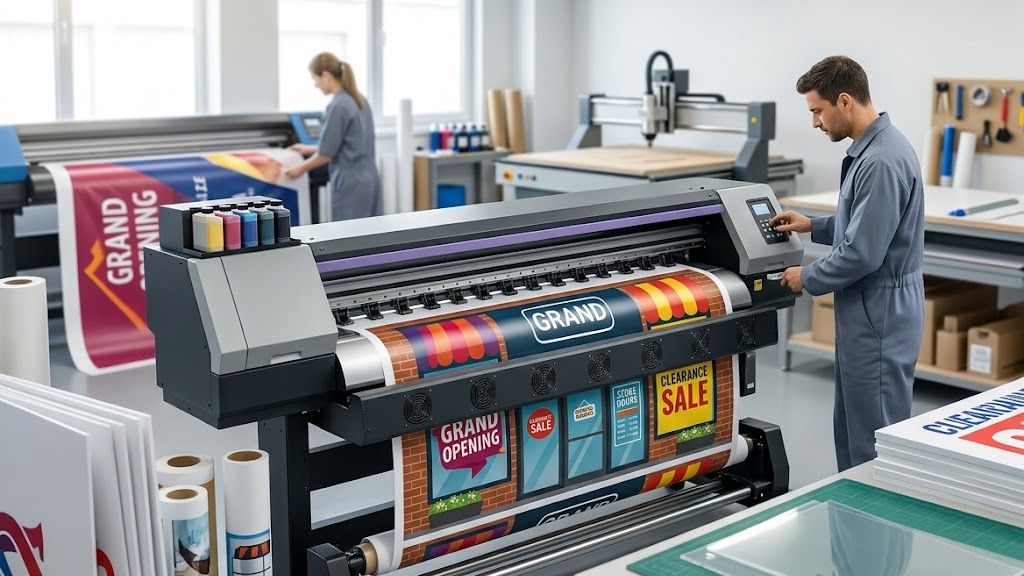
- Digital Prints: Flexible for colours and short runs; artwork detail affects price.
How Does Sign Size and Design Complexity Impact Pricing?
Larger signs increase material and handling costs; intricate designs need more time and specialized printing—both raise the price.
- Larger Signs: Scale up material and labour costs.
- Complex Designs: Add production steps and prepress time.
- Material Impact: Choice of substrate affects how size and detail translate to cost.
Which Types and Materials of Retail Signage Are Most Cost-Effective?
Vinyl banners and window graphics usually offer the best cost-to-impact ratio, while acrylic directional or feature signs cost more but add perceived value.
- Vinyl Banners: Low cost, versatile for promotions and events.
- Window Graphics: Good for footfall and seasonal messaging at moderate cost.
- Directional Signs: Higher cost but improve navigation and experience.
What Are the Price Differences Between Indoor and Outdoor Retail Signs?
Outdoor signs typically cost more due to durable materials and heavier installation. Indoor signs are usually cheaper to produce and install.
- Outdoor Signs: More expensive for durability and mounting.
- Indoor Signs: Cheaper materials and simpler installation.
- Installation Complexities: Location and method affect total cost.
How Do Retail Display Graphics Pricing Vary by Material and Type?
Display graphics pricing depends on substrate, size, and intended use—choose material and complexity that meet marketing goals within budget.
- Material Differences: Each substrate has trade-offs in cost and performance.
- Graphics Complexity: Intricacy increases printing time and cost.
- Strategic Purpose: Allocate budget to pieces that drive sales or visibility.
Are Installation and Maintenance Costs Included in Retail Sign Pricing?
Base prices often exclude installation and maintenance. Factor in separate installation fees and ongoing upkeep—especially for outdoor signage—to understand total cost.
- Separate Installation Fees: Often billed separately depending on scope.
- Maintenance Costs: Routine upkeep extends life and avoids costly replacements.
- Cost Breakdown: Ask suppliers for itemised quotes.
What Are Typical Installation Fees for Custom Retail Signage?
Fees vary by sign type and location. Simple banners are inexpensive to hang; illuminated or high-mounted signs require more labour and equipment. Typical ranges can span roughly $50 to $1,200 depending on complexity.
- Sign Type Influence: Complex signs need more time and specialists.
- Location Requirements: Permits, lifts, and access affect cost.
- General Fee Range: Expect low-end fees for simple installs and higher fees for complex work.
How Does Ongoing Maintenance Affect Total Signage Expenses?
Regular maintenance protects your investment and prolongs lifespan; neglect can lead to repairs or earlier replacement, raising lifetime costs.
- Routine Upkeep: Scheduled cleaning and checks reduce deterioration.
- Neglect Consequences: Deferred maintenance increases repair bills.
- Budgeting for Maintenance: Include upkeep in long-term signage costs.
How Can Design Services and Turnaround Times Affect Overall Sign Printing Costs?
Design time and expedited schedules add cost. Plan artwork and lead times to control labour charges and rush fees.
- Complex Design Costs: More design hours and revisions raise fees.
- Order Volume Effects: Larger runs often lower unit costs.
- Influence of Timing: Expedited production typically carries surcharges.
What Are Customization Options Available Through Professional Design Services?
Professionals can deliver custom layouts, brand colours, material recommendations, and variable-data features like QR codes to support engagement.
- Custom Layouts and Color Schemes: Ensure brand consistency.
- Material Options: Match look and durability to budget and location.
- Variable Data Printing: Add QR codes or unique messaging for campaigns.
How Does Project Planning Influence Printing Turnaround and Pricing?
Clear project plans with defined specs and realistic lead times reduce delays and prevent rush charges.
- Complex Projects Require Time: Build sufficient lead time for approvals and production.
- Budget Efficiency Through Planning: Early planning reduces costly last-minute changes.
- Lead Times Importance: Allow for production, shipping, and installation windows.
Frequently Asked Questions
1. What types of signs are most effective for attracting customers?
Window graphics, banners, and clear directional signage are most effective: window graphics show promotions, banners announce events or sales, and directional signs improve navigation.
2. Are there specific regulations for outdoor signage that I need to consider?
Yes. Local zoning and permitting rules can limit size, placement, and sometimes materials. Check with your local planning department before installation.
3. How long should I expect my custom signage to last?
Lifespan depends on material and environment: outdoor vinyl often lasts a few years, while well-maintained acrylic can last much longer; indoor signs usually endure longer.
4. Can I customize the size and shape of my signage?
Yes. Signs can be tailored in size and shape, though unusual dimensions can increase cost due to extra material and complex production or installation.
5. What are the benefits of using digital printing for signage?
Digital printing offers high-resolution graphics, fast turnaround, and cost-efficiency for short runs or frequent updates—good for promotions and seasonal displays.
6. How do I choose the right signage provider?
Compare portfolios, references, material options, lead times, and support. Request multiple quotes to evaluate price, quality, and service.
7. Are there eco-friendly options available for custom signage?
Yes. Many suppliers offer recycled substrates, biodegradable materials, and water-based inks to reduce environmental impact while maintaining durability.
Conclusion
Custom retail signage increases visibility and customer engagement when selected and budgeted wisely. Contact Albert Basse Associates, Inc. to understand material, size, design, and installation trade-offs to choose effective, cost-conscious solutions for your storefront.