Custom Retail Signage for Convenience Stores — Your Complete Guide to Design, Printing & Installation

Well-made convenience store signs do more than mark a wall — they increase visibility, draw customers inside, and reinforce your brand. These custom solutions communicate key information quickly while reflecting the store’s personality. In this practical guide we cover custom retail signage from design and printing to installation and upkeep. Many store owners find it hard to create signs that stand out in a crowded market; this guide gives clear, actionable steps to help you design, print, and install signage that engages shoppers and supports sales. We’ll walk through the benefits of custom signs, the best digital printing options, smart design choices, installation best practices, budgeting, and the latest retail signage trends.
What are custom convenience store signs — and why they matter?
Custom convenience store signs are purpose-built visual tools that deliver messages to customers where it counts. From promo banners to wayfinding and point-of-purchase displays, each sign type supports a specific customer action or experience. The main advantage is improved visibility and consistent brand recognition — both of which strongly influence shopper behavior and purchases. Good signage grabs attention quickly and communicates essential information clearly, making the store easier to navigate and more inviting to customers.
Defining custom retail signage and where to use it
Custom retail signage covers banners, window graphics, shelf and point-of-purchase displays, directional signs, and more. Placement matters: window graphics pull in foot traffic, while POP displays drive impulse buys near checkout. These applications work across convenience stores, supermarkets, and specialty shops. When you match the sign type to its function and location, signage becomes an efficient tool to increase engagement and sales.
How custom signs lift storefront visibility and customer engagement
The effect of well-designed signage on storefront visibility is real — studies show it can boost foot traffic by up to 30%. Striking visuals and concise messaging capture attention and invite entry. Effective signs also inform customers about promotions, hours, and key products, reducing friction and encouraging purchases. With eye-catching design and strategic placement, convenience stores can create a welcoming environment that encourages browsing and buying.
Which digital printing services work best for commercial signage?
Picking the right digital printing method is essential to produce high-quality, long-lasting signs. Different techniques suit different needs; knowing your options helps you choose the best approach for each project.
Exploring digital printing techniques for retail and convenience stores
Digital printing techniques like UV curing and eco‑solvent printing are reliable choices for vivid, durable signage. UV printing cures inks instantly with ultraviolet light, delivering sharp colors and excellent color accuracy. Eco‑solvent printing uses lower‑impact inks that stand up to indoor and outdoor use. Both methods produce long‑lasting graphics suitable for busy retail environments.
Choosing materials and sizes for signs that last and perform
Material and size decisions affect durability, cost, and impact. Common options include vinyl for flexible banners and window graphics; acrylic for crisp, professional indoor signs; and aluminum for durable outdoor units. Bigger signs attract attention, but they must fit the store’s façade and sightlines. Select materials and dimensions that match the intended location and expected lifespan to get the best return on your signage investment.
How to design storefront signs that sell
Effective storefront design is intentional: color, type, and layout should guide the eye and make essential information instantly readable. A strategic approach turns signs into silent salespeople.
Key design elements for convenience store signage
Focus on color contrast, readable typefaces, and a logical visual hierarchy. Bright or brand‑specific colors draw attention; high contrast improves legibility from a distance. Choose fonts that remain legible at scale and reflect your brand personality. Arrange information so the most important message — price, offer, or direction — is seen first. These choices make signage clear, quick to understand, and more effective at driving action.
Blending brand identity with industry needs
Signage should reflect your brand while meeting the practical needs of convenience retail. Use brand colors, logos, and consistent messaging so customers instantly recognize your store. Also consider industry specifics — quick service cues, accessibility, and clear promotions work well in convenience environments. Aligning design with both brand and context builds trust and repeat business.
What are the installation and maintenance best practices for commercial signage?
Proper installation and ongoing maintenance keep signs safe, visible, and working longer. A few simple standards protect your investment and maintain a professional appearance.
Step‑by‑step sign installation for convenience stores
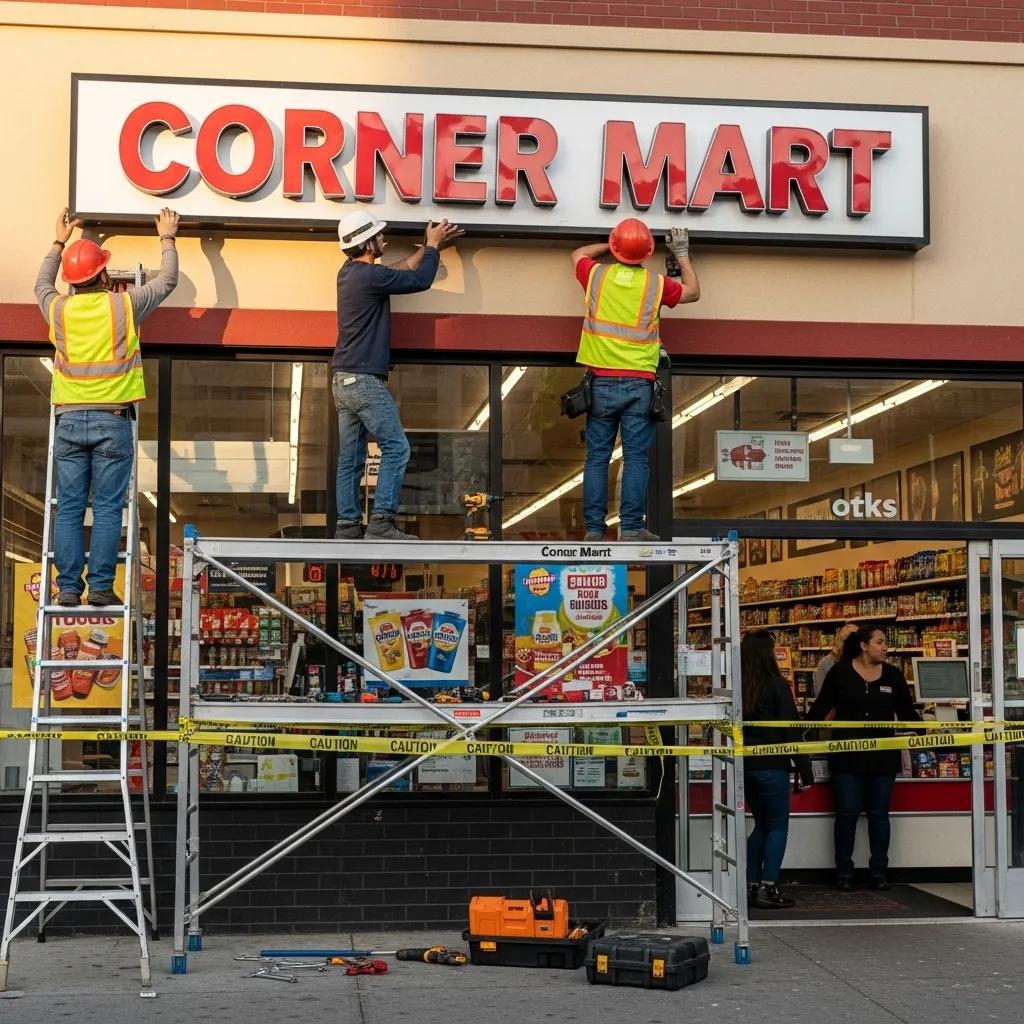
Start by selecting the high‑visibility location that meets local rules. Gather mounting hardware, anchors, and safety gear before you begin. Secure the sign, confirm it’s level and stable, and test any electrical or lighting components. Finish with a thorough inspection to ensure everything is fastened and functioning. For complex installs or rooftop and electrical work, work with a licensed installer to meet safety and code requirements.
Maintenance tips to extend signage life and appearance
Set a routine for cleaning and inspections. Remove dirt and grime that reduce visibility and check for wear or loose fittings that need repair. Address faded or damaged graphics promptly to keep your messaging fresh. Regular upkeep avoids bigger repairs and keeps your storefront looking professional.
How much do custom convenience store signs cost — and how does the quote process work?
Costs vary with materials, size, design complexity, and installation. Knowing the cost drivers helps you budget and compare providers effectively.
Factors that influence custom retail signage pricing
Material choice, print method, and design detail drive price. Higher‑grade materials cost more but last longer. Complex artwork or custom shapes require more production time. Installation adds cost depending on access, permits, and labor. Consider lifecycle value — a higher initial spend can mean fewer replacements and better long‑term visibility.
How to request and compare quotes from signage providers
When you request quotes from signage providers, give clear specs: size, material, location, and any mounting or electrical needs. Compare not just price but materials, turnaround time, warranties, and past work. A detailed brief yields accurate bids and makes it easier to find the provider that matches your priorities and budget.
What are current trends and compliance requirements in retail signage?
Staying current with materials, tech, and local rules keeps your signage effective and legal. Two trends stand out: sustainability and digital integration.
Eco‑friendly materials and digital signage integration
Sustainable options — recycled substrates and biodegradable inks — are increasingly available and appeal to eco‑minded customers. Digital signage lets you update content instantly and run targeted promotions, improving relevance and reducing print waste. Combining eco‑friendly materials with selective digital displays gives you flexibility and a stronger brand story.
Understanding local signage regulations and industry standards
Local zoning and building codes set rules for size, placement, and illuminated signs. Check municipal requirements before ordering or installing. Also follow visibility and safety standards to ensure signs are readable without creating hazards. Compliance prevents fines and avoids costly rework.
| Sign Type | Material Options | Typical Cost Range |
|---|---|---|
| Banners | Vinyl, Fabric | $50 – $300 |
| Window Graphics | Vinyl, Perforated Film | $100 – $600 |
| Directional Signs | Aluminum, Wood | $200 – $1,200 |
This table shows common sign types, suitable materials, and typical price ranges so you can plan and compare options quickly.
Ultimately, custom convenience store signs are powerful tools for increasing visibility and improving the shopper experience. By getting the design, printing, installation, and maintenance right — and staying mindful of trends and regulations — you create signage that attracts attention and supports sales.
Frequently Asked Questions
What types of custom signage are most effective for convenience stores?
Promotional banners, window graphics, and point‑of‑purchase displays are highly effective. Banners spotlight special offers, window graphics draw foot traffic, and POP displays encourage impulse purchases at high‑visibility points. Using a mix that fits your layout and goals gives the best results.
How can I ensure my signage complies with local regulations?
Start by reviewing local zoning and permitting rules that cover size, placement, illumination, and signage type. If needed, consult local permitting offices or a signage professional who knows the code. Planning with compliance in mind saves time and avoids fines.
What maintenance practices should I follow for my signage?
Establish a routine: clean graphics regularly, inspect mounting hardware, and repair damage promptly. Regular checks help preserve visibility and extend the life of your signs, keeping your store presentation sharp.
What are the benefits of using eco‑friendly materials for signage?
Eco‑friendly materials reduce environmental impact and can strengthen your brand with sustainability‑minded customers. Options like recycled substrates and biodegradable inks cut waste and can differentiate your store in a crowded market.
How can digital signage enhance customer engagement?
Digital signage delivers live, changeable content — promotions, alerts, and real‑time messages — that keep your store current and relevant. Motion and dynamic visuals capture attention better than static signs, helping to drive foot traffic and on‑site purchases.
What factors should I consider when choosing a signage provider?
Evaluate material quality, design and production capabilities, installation experience, and references. Review portfolios and warranties, and ask about permit support and installation services. Comparing several providers helps you find the best balance of cost, quality, and reliability.
Conclusion
Custom convenience store signs are a high‑impact, cost‑effective way to boost visibility and improve the customer experience. Master the essentials — design, print, install, and maintain — and you’ll have signage that supports sales and strengthens your brand. Ready to elevate your storefront? Our solutions are designed to deliver clear results and lasting value.